Generative AI Development: A Complete Guide for Businesses in 2026
AI is no longer an optional choice for businesses; instead, it serves as a core foundation that drives automation, decision-making, and market competitiveness across every major industry. Whether your business is in healthcare or travel, e-commerce or banking, AI is reshaping the way your business operates. In 2026, generative AI development is taking it further by helping businesses build intelligent copilots, automate knowledge-heavy tasks, generate content, and create more personalized experiences.
Therefore, if you are running a business and wondering where to even start with generative AI, then you’re not alone. Most of the business owners are well aware that they’ve to move on this, but what they’re not sure about is whether it’s actually worth building or it’s just hype.
This guide cuts through that. Throughout the blog, we will walk you through what generative AI development really means for businesses, the use cases actually driving ROI right now, what it costs to build, and more.
What is Generative AI Development?
Well, there’s a lot about Generative AI, but do you actually know what it is? So, generative AI refers to an AI that creates new stuff (text, images, code, audio) instead of just analyzing or sorting what already exists.
In simple terms, you give a prompt, and it will generate and give you something new based on patterns it learned from tons of data. The best examples are ChatGPT, Claude, and Google Gemini.
Now, if we talk about Gen AI solutions development, it is the process of building software that can create something new, on its own, based on what it has learned from your existing data. This goes beyond using ChatGPT or any other tool. It’s about training or fine-tuning a model on your own business data, connecting it to your existing tools and systems, and setting it up to actually do a job, like answering custom queries, pulling insights from your internal documents, and so on.
Why Generative AI Development Matters for Businesses

Generative AI has grown from its early experimental phase. And now businesses are treating it as a core operation, unlike a side project a few years ago. Here’s why:
Generic AI Has Limits. Custom AI Knows Your Business
Popular tools like ChatGPT or Gemini can draft an email or summarize a document, but they don’t know about your product catalog, customer history, or internal processes. But custom-built Gen AI solutions do, and that’s what turns AI from a convenience into a real operational advantage.
Customers Expect Faster, More Personal Experiences
People generally expect fast, relevant responses whether they’re chatting with support, browsing recommendations, or asking about a product. At this point, businesses that have built up well-responsive AI systems keep up.
Automate Repetitive Work and Free Up Your Team
Drafting reports, tagging data, answering common queries, and writing first-draft copy all used to take hours. But Generative AI development handles all this reliably and helps free teams to focus more on higher-value work.
Turn Business Data Into Faster Decisions
Custom AI tools can easily pull internal data and surface insights in plain language, so leaders don’t have to wait for reports or dig through dashboards to make informed calls.
Generative AI Is Becoming a Competitive Baseline
As more companies across different industries like healthcare, banking, retail, and travel are adopting custom AI systems, having one is turning into the expected standard rather than a bonus. Businesses that delay risk falling behind competitors who are already reaping the benefits.
Key Types of Generative AI Solutions Businesses Can Build
Since you’re aware of what generative AI is and why it matters in 2026, another important thing that you need to be aware of is the types. Generative AI is a category, not a single tool, and businesses can build different solutions from it depending on what they actually need. Here are the most common types of AI solutions businesses are investing in right now:
AI Chatbots & Virtual Assistants
Built on generative AI, these chatbots go beyond the scripted FAQ bots. They understand the context, hold natural conversations, and pull answers directly from business data, helping businesses with customer support, lead qualification, and internal help desk queries around the clock.
Content Generation Tools
Once generative AI is trained on your existing content, from blog posts and product descriptions to ad copy and email campaigns, it produces first drafts in your brand’s tone, removing the blank-page problem and speeding up the entire writing process.
Code Generation & Developer Copilots
Based on the natural language prompts, these tools help businesses with writing down boilerplate code, suggesting fixes, or generating functions; this lowers the development time on repetitive, time-consuming coding tasks significantly.
Image & Video Generation Tools
Used for creating marketing visuals, product mockups, ad creatives, or personalized video content, these tools let businesses produce visual assets on demand, without needing a full production team or photoshoot for every campaign.
Data Analysis & Summarization Tools
Generative AI reads through large volumes of internal documents, reports, or datasets, and summarizes key findings in plain language, helping teams with quick, digestible insights that’s without requiring them to manually go through spreadsheets or dashboards.
Personalization Engines
These systems create and provide tailored recommendations, content, or offers based on individual user behavior and purchase history. These engines are commonly used across industries like e-commerce, streaming, and retail businesses to increase engagement, customer satisfaction, and overall conversion rates.
Voice & Audio Generation
From AI-generated voiceovers to conversational voice assistants, businesses are using this for customer service lines, accessibility features, and audio content production. Creating natural-sounding speech without hiring voice actors or booking studio time.
Real-World Use Cases by Industry

Generative AI development services are not one-size-fits-all. What works for a hospital won’t work the same for a bank or travel company. Let’s understand this:
Healthcare
Doctors spend a certain period of their day on paperwork, not patients. Gen AI handles clinical documentation, summarizes patient records, and takes over scheduling and insurance queries, while AI assistants answer common health questions instantly so patients aren’t stuck waiting on hold.
Banking & Finance
Banks are using generative AI to catch fraud, offer personalized financial advice, and handle routine transaction or account questions without a human stepping in. It also helps compliance teams get through dense regulatory documents in a fraction of the usual time.
E-commerce & Retail
Writing product descriptions at scale used to take a dedicated team. Generative AI now handles it in a fraction of the time, while also powering recommendation engines and chatbots that guide customers through sizing questions, order issues, and returns.
Travel
Planning a trip takes a lot of time, and every travel company knows it. But now, using AI, they’re building personalized itineraries, suggesting destinations based on past bookings, and running support assistants that handle cancellations and booking changes 24/7.
Logistics
Those logistics teams buried in spreadsheets: for them, generative AI is a genuine relief. It forecasts demand, generates shipment summaries, and automates reporting, pulling data from multiple systems so teams don’t have to go through reports manually every time.
Ready to Build a Generative AI Solution for Your Business?
We help businesses build custom AI solutions that automate workflows, improve decisions, and create smarter customer experiences.
Generative AI Development Process (Step-by-Step)
Building a generative AI solution requires a structured process that typically works step by step, from idea to a live, working system.
Discovery & Use Case Identification
This is where the real work starts. The goal here is to figure out exactly what problem the AI needs to solve. It can automate support, generate content, or speed up internal reporting.
Data Collection & Preparation
Generative AI is only as good as the data behind it. This step involves gathering relevant business data, cleaning it up, and organizing it so the model can actually learn from it, instead of guessing.
Model Selection
At this stage, businesses decide between using a pre-trained foundation model like GPT or Claude, or building something more custom. The choice usually comes down to budget, use case complexity, and how specific the output needs to be.
Fine-Tuning & Training
The chosen model gets trained on your specific data, so it picks up your industry terms, brand voice, and the exact kind of tasks it needs to handle.
Integration
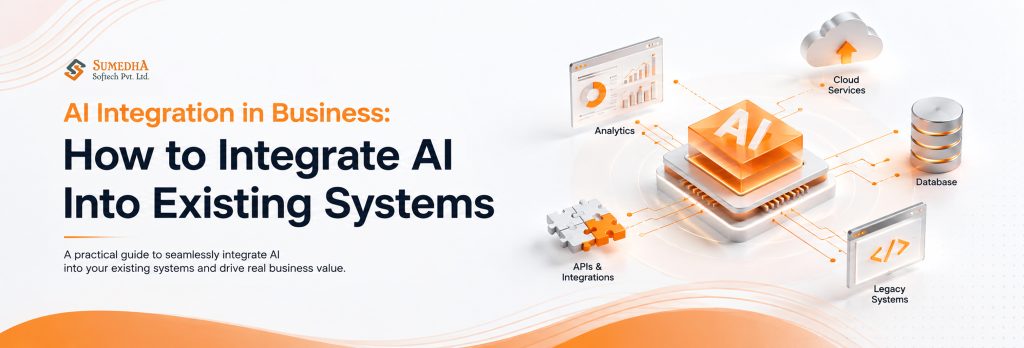
The AI model gets connected to your existing systems, like your CRM, website, internal tools, or customer databases, so it can actually pull real information and take real action, not just sit separately from your workflow.
Testing & Validation
Before going live, the system gets tested thoroughly for accuracy, safety, and reliability. This step detects issues like incorrect outputs or unexpected behavior before real customers or employees start using it.
Deployment
After successful testing, the solution goes live in the actual business environment, whether that’s a customer-facing chatbot, an internal tool, or a backend automation system running in the background.
Monitoring & Continuous Improvement
Generative AI isn’t a one-and-done build. Once launched, teams monitor performance, gather feedback, and keep refining the model so it keeps getting better with passing time.
Popular Generative AI Models & Tools in 2026
With so many options out there, picking the right model is honestly one of the toughest calls in this whole process. New ones keep launching, older ones keep getting better, and whatever was the “best” choice a few months back might already be outdated. Here’s where things actually stand right now.
| Model | Best For | Why It Stands Out |
| Claude (Opus 4.8 / Sonnet) | Coding, long-form writing, structured content | Performs strongly on coding benchmarks and stays consistent across long, multi-section documents |
| GPT-5.5 | Creative work, multimodal content | Comes with Sora built in for video generation, though it trails slightly behind Claude on coding tasks |
| Gemini 3.1 Pro | Reasoning, real-time info, long context | Pulls in real-time web data for more accurate, fact-based answers, and fits naturally into Google’s ecosystem |
| Llama 4 & other open-weight models | Self-hosted, cost-sensitive projects | Businesses can host it themselves, which helps with both privacy and long-term cost. |
| DeepSeek, Qwen, GLM | High-volume, budget-friendly use | These open models have closed most of the gap with the bigger closed models, now performing within roughly 5 to 15 points of them on major benchmarks. |
Proprietary or Open-Source? Here’s How to Think About It
If you’re just getting started, your proprietary models like Claude, GPT, or Gemini are the easier and perfect route. There’s nothing to host or maintain, and they work well right out of the box for most common use cases, chatbots, content writing, internal tools, and that sort of thing.
Coming onto open-source models, they start making more sense once data privacy becomes a real concern, or your usage volume is high enough that per-token API costs start adding up. However, the problem is that these need more hands-on setup, and your team ends up responsible for hosting and maintaining them going forward.
Comparing the two, there isn’t a single best model for everything. The smarter approach is picking up the right model for each specific task and staying flexible instead of locking your business into just one provider.
Cost of Generative AI Development
This is usually the first question business owners ask, and understandably so. But there’s no one-size-fits-all price for AI application development. Here’s what affects the price.
- Scope – A simple chatbot costs far less than a full AI system connected to multiple business tools.
- Data Readiness – If your data is messy or scattered, expect extra cost for cleaning and organizing it before any AI work can begin.
- Model Choice – Using an existing model via API keeps costs lower. Training or fine-tuning a custom model raises the price.
- Integration – The more systems the AI needs to connect with, like your CRM, website, or internal databases, the higher the development cost.
- Testing & Compliance – Industries like healthcare or finance need extra testing and security work, which adds to the budget.
Meanwhile, most of the projects fall into one of three categories: a small pilot to test an idea, a single working feature built for real use, or a larger system with multiple workflows.
Also, development is just the first cost. After launch, there are ongoing expenses too, hosting, monitoring, and ongoing fine-tuning as usage grows. Businesses that only budget for the build phase often get caught off guard by these running costs later.
Challenges & Risks in Generative AI Development
Generative AI isn’t risk-free, and any business considering it should go in with eyes open. Here are the challenges that come up most often:
Data Privacy & Security
AI systems often deal with sensitive business or customer data, so proper handling and storage matter a lot, especially in industries like healthcare and finance.
Inaccurate or Inconsistent Output
Sometimes AI models can generate incorrect or made-up information, known as hallucination. This needs to be tested for and minimized before launch.
Integration Complexity
Connecting AI to existing systems like CRMs or internal databases isn’t always easy, especially if you’re using older or custom-built software.
Compliance Requirements
Some industries have strict regulations related to data use and AI-generated content, so this needs to be accounted for early, not after the system is live.
Ongoing Maintenance
AI models can drift or become less accurate over time as data and business needs change, so they need regular monitoring and updates.
So, how to overcome these challenges? Companies can overcome this by choosing to hire dedicated developers instead of building an AI team from scratch. At Sumedha Softech, our dedicated developers bring hands-on experience handling data security, integration, and compliance, so all these risks are managed from the start instead of becoming a problem after launch.
Conclusion
Generative AI isn’t something that businesses can afford to sit out anymore. Whether it’s automating repetitive work, speeding up decisions, or delivering faster, more personalized customer experiences, the businesses adopting it now are setting the pace for their industries in 2026 and beyond.
That said, jumping in without the right guidance often leads to wasted budget and tools that never quite fit how your business actually works. This is where working with a team that offers real generative AI consulting services makes a real difference. Sumedha Softech helps you figure out what’s worth building, what to skip, and how to get it right, so the end result actually fits your business, not just a trend.
Frequently Asked Questions
Q1. What is generative AI in simple terms?
It’s a type of AI that creates new content, like text, images, or code, instead of just analyzing or sorting existing data for you.
Q2. Is generative AI different from regular AI?
Yes. Regular AI mostly predicts or classifies information, while generative AI actually creates something entirely new based on patterns it has learned.
Q3. How long does it take to build a generative AI solution?
It depends on complexity. A simple pilot can take a few weeks, while a full production-ready system usually takes a few months to complete.
Q4. Is generative AI safe for business use?
It can be, as long as it’s built with proper data security, thorough testing, and ongoing monitoring in place from an experienced development team.
Q5. Can small businesses use generative AI too?
Definitely. Many small businesses start small with something like a chatbot or content tool, then scale up to bigger AI systems over time.
Q6. Do I need my own data to build a custom AI solution?
Yes, generally. Your own business data is what makes the AI genuinely useful for your workflows, instead of giving generic, one-size-fits-all answers.